Europchess was founded on 26 September 1972 (opens in a new tab) as a leisure circle (“cercle de loisir”) of the European Communities in Brussels. More than fifty years later, the club still brings together staff of the European institutions and their families around the chessboard.
The history of Europchess
The early years
The club was created in 1972 by a small group of officials who wanted to play chess regularly after work. In 1973 Europchess joined the Belgian chess federation, which opened the door to official competitions and rated games.
From the very beginning the club combined serious competitive play with a social and international spirit, reflecting the many nationalities working in the European institutions.
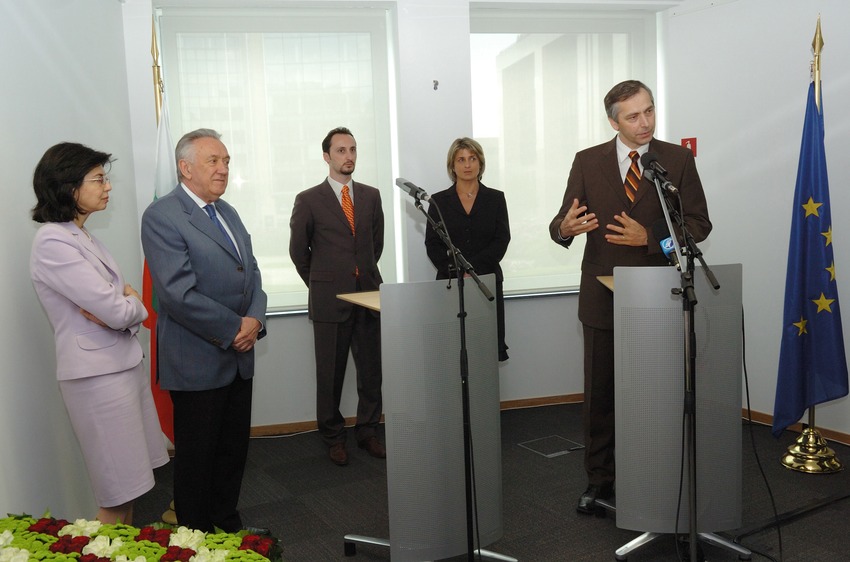
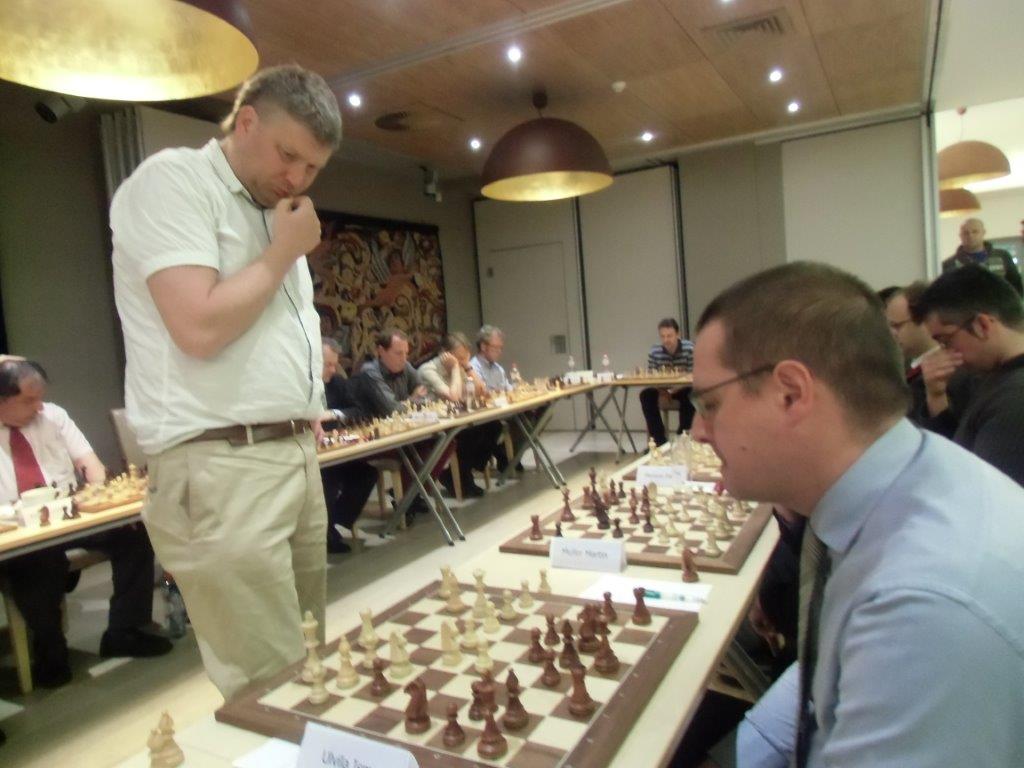
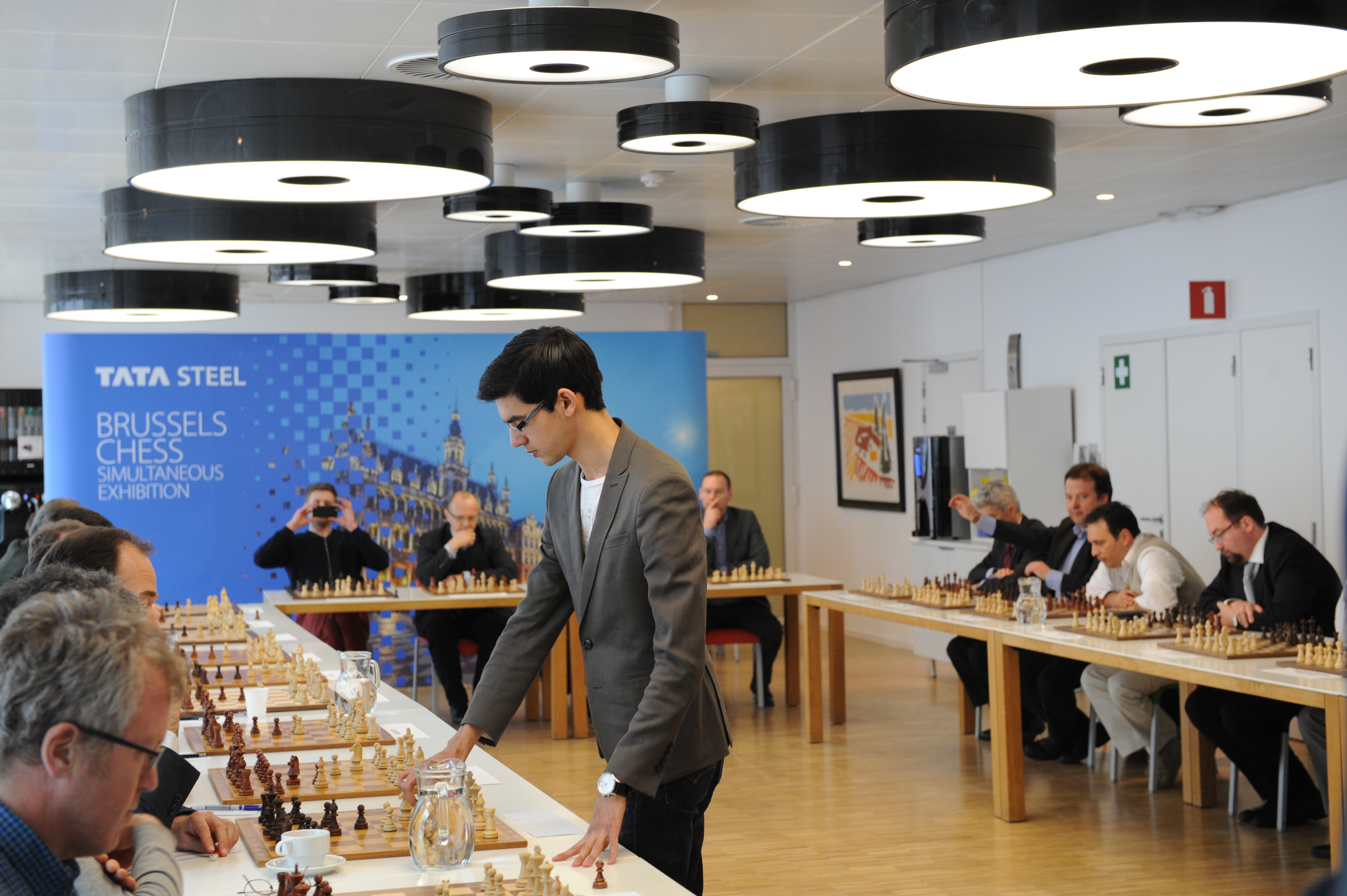
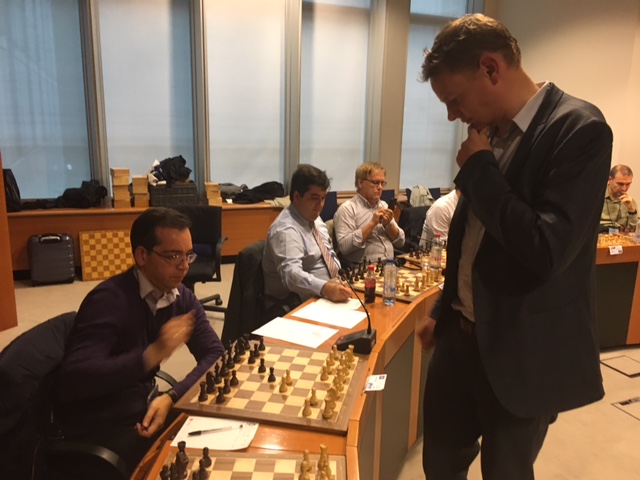
Over the decades Europchess has welcomed some of the greatest names in chess for simultaneous exhibitions: Alexander Kotov in 1976, Garry Kasparov in 1997, Predrag Popović in 2004, Veselin Topalov in 2006, and many more.
This tradition continues today with our regular grandmaster visits, lectures and training sessions.
Between 1982 and 1990 the club organised a series of international tournaments in Brussels. Europchess has also long taken part in the interprofessional competitions of the Brussels region, and has played in the Belgian National Interclubs Championship since 2008, today with five teams.
Alongside competitive play, the club has always offered lectures and training sessions for members of all levels.
Club officials
Since 1973 the club has been run by a succession of volunteer presidents, secretaries, treasurers and tournament directors. The complete list of office holders is kept by the committee and can be provided on request.
Grandmaster visits
Grandmaster encounters recorded since 2011, including simultaneous exhibitions against 20 or more players and online events.
The roll of honour of the club's internal competitions, as recorded on the club's previous website.
Club Championship (Rapid)
Year
Champion
2002
Christophe Keller
2003
Christophe Keller
2004
Timothy Binham
2005
Timothy Binham
2006
Thomas Wiley
2007
Thomas Wiley
2007
Frank Hoffmeister / Thomas Wiley
2008
Christoph Keller / Thomas Wiley
2009
Frank Hoffmeister
2010
Jenő Czuczai
2011
Thomas Wiley
2012/13
Thomas Wiley
2013/14
Georgi Tomov
2014/15
Thomas Wiley
2015/16
Thomas Wiley
2016/17
Georgi Tomov
2018
Rossen Roussev
2019
Georgi Tomov
Blitz Cup
Year
Champion
2011
József Molnár
2012
Frank Hoffmeister
2013
Carl Buhr
2014
Carl Buhr
2015
Carl Buhr
2016
Frank Hoffmeister
2017
Georgi Tomov
2018
Rossen Roussev
2019
Rossen Roussev
Want to replay these encounters move by move? The club's notable games — including the grandmaster simultaneous exhibitions — are on the Games page.
Members in the press
Contributions and interviews preserved from the previous club website. These are historical accounts; roles, teams and circumstances reflect the time of publication.
Europchess in “Europa-Rochade”
A feature on the club published in the German chess magazine Europa-Rochade in October 2022. Written by David Moreno, it includes interviews with Frank Hoffmeister and Johannes Bertram — published, as it happened, just as the Carlsen–Niemann controversy broke out.
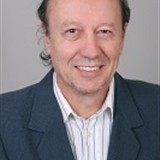
IM Timothy Binham looks back on chess, translation and playing for Europchess. Interview by Erik Rosendahl; English translation preserved from the old site.
Read the full archived interviewPhotograph preserved with the original interview.
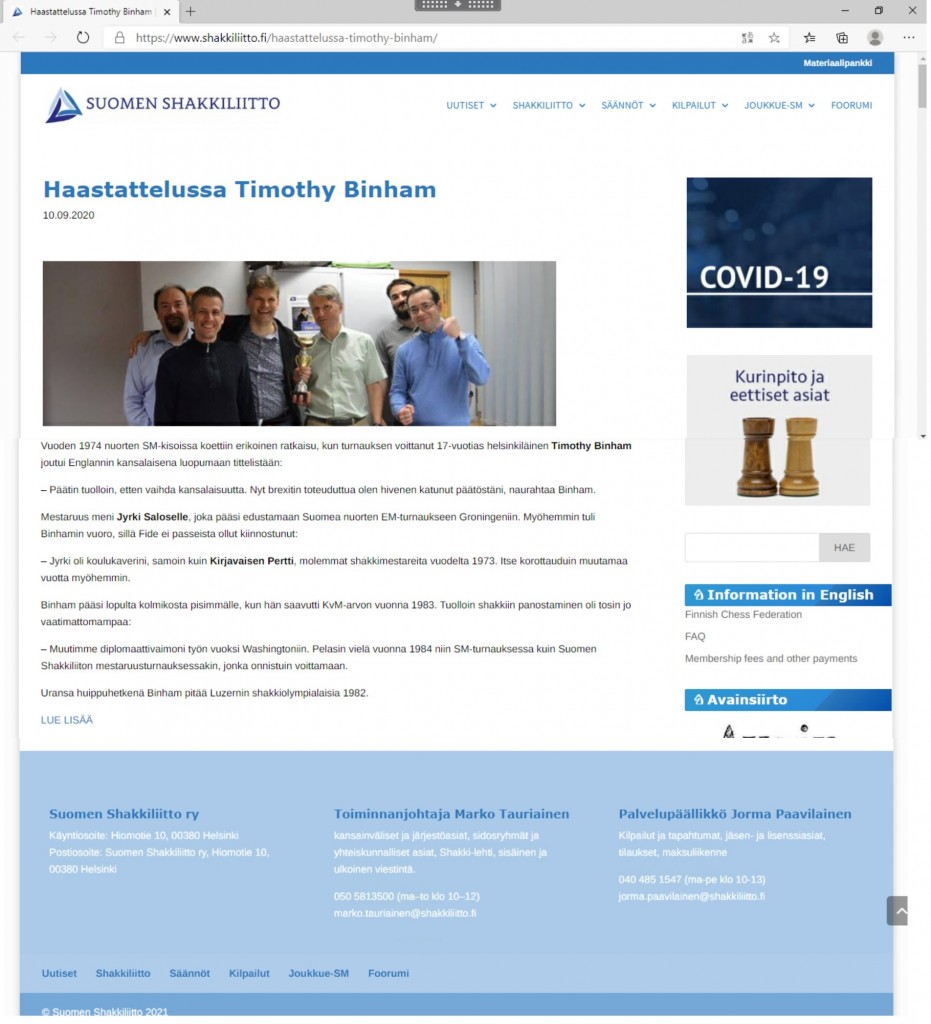
An interview with IM Tim Binham (with a nice picture) on the Finnish Federation website. Translation below!
Interview with Timothy Binham
Text: Erik Rosendahl
The Finnish junior championships in 1974 had an unusual conclusion, as the winner of the tournament, Timothy Binham, a 17-year-old player from Helsinki, had to renounce the title, being a British citizen.
“I decided at the time that I would not apply for Finnish citizenship. Just recently, with Brexit, I’ve started to regret that decision”, Binham chuckles.
The championship went to Jyrki Salonen, who was also selected to represent Finland in the European junior championship tournament in Groningen. Binham’s turn came later, however, since FIDE was not interested in what your passport was:
”Jyrki was my classmate at school, and so was Pertti Kirjavainen. They both received the title of Master in 1973. I myself had to wait a few years longer.”
Of this trio, however, Binham eventually went furthest, receiving the International Master title in 1983. This was the limit of his ambition, however.
“My wife was a Finnish diplomat, and we moved to Washington DC. Before that in 1984, I played in the Finnish Chess Federation’s annual tournament, which I managed to win, as well as in the Finnish championships, where I played badly.”
Binham considers the Lucerne Olympiad in 1982 to have been the high point of his chess career:
“I qualified for the team by coming third in the Finnish championships that year. In Lucerne, I scored 6½/10, although this was not enough for an IM norm, since I played too few titled opponents.”
He made his final norm the following year. The first norm had come in an exotic setting: in Narvik, Norway, which lies 1,500 kilometres north of Oslo and north of the Arctic Circle.
“l was playing in Gausdal in summer 1979, when the organiser Arnold Eikrem asked me if I was interested in playing an international tournament in Narvik at the end of the summer. I was.”
Binham joined Helsingin Shakkiklubi, Finland’s oldest chess club, and played his first tournament at the age of 14 in the early 1970s.
“My mother’s brother was the chess problemist Pentti Sola, and my mother was acquainted with Eero E. Böök, probably the strongest Finnish player of all time. This is why HSK seemed a natural choice.”
Binham eventually became first board on the HSK team. In the 1980s, this opened up the opportunity for him to participate in three strong international tournaments organised by his club and sponsored by the daily newspaper Helsingin Sanomat.
As the 1980s wore on, Binham, who had studied English philology and world literature at the University of Helsinki, focused increasingly on translation. During these years, he translated several books and articles about Finnish art and architecture:
– My ‘magnum opus’ was a three-part biography of the architect Alvar Aalto by Göran Schildt, which I translated from Swedish into English. Schildt also edited a collection of Aalto’s originals writings published as Alvar Aalto – In His Own Words, for which I had to translate from German as well as from Finnish and Swedish.”
Timothy seems to have had translation in his blood, for his father Philip Binham, long-time lecturer of English at the Helsinki School of Economics, translated a significant amount of Finnish literature into English from the 1970s on:
“We jointly received the Finnish Government’s prize for translation in 1990, and I flew from Washington to Helsinki to attend the award ceremony. I have to admit, though, that my Dad received the prize for his genuine achievements, while I was rewarded mainly for expected future achievements which never really materialised. I think the jury just liked the idea of a continuum.”
Philip Binham had originally come to Finland to teach English at a time when the country was just beginning to recover from the war: “Of all the places in the world, he wound up in Lappeenranta just across the Soviet border. He taught the managers of the local pulp mill (who were Swedish-speakers, although everyone else in this industrial town spoke Finnish). He must have been one of the very first foreigners to settle in Finland after the war. He had fought in the war and found the atmosphere in post-imperial Britain stifling, which is why he wanted to go abroad. There was a lot of demand for the language of international trade among Finns, who had mostly studied German at school before the war.”
Opening up one’s mind to new people, languages and cultures is rewarding. Chess can be a help:
“The best thing about chess is how international it is. We lived in Washington for four years, during which time one of the tournaments I played in was the U.S. Open in Las Vegas. We then spent three years in Vienna, where one of the opponents I had the honour of playing was Zsófia Polgár.”
Top-level chess is a tough sport, however:
“In the United States, I realised that playing professionally was only possible for a very small elite. For everybody else, chess was an expensive hobby, since distances were long, sponsorship scarce, and even grandmasters did not necessarily get their expenses paid.”
However, it’s also possible to enjoy chess on an amateur basis. That is what happened to Binham, who moved to Brussels to work for the EU in 1997. He found a counterbalance to his work as a translator in an interesting project: a chess club for EU officials:
“Our club, Europchess, was promoted to the top division in the Belgian chess league in spring 2019. We started in the fifth division about ten years earlier, and rose through the ranks.”
Bulgaria’s accession to the EU in 2007 helped:
“We have two strong Bulgarians on our top boards. Not all our players are men: the young Paula Gitu, a member of Moldova’s Olympic team, also plays for Europchess. I believe her father works for the EU in Brussels.”
Even without Covid-19, this purely amateur team could expect to have a tough time in the strong Belgian league:
“The 2019–2020 season was stopped in March due to the pandemic, and the standings after round 9 were declared the final result. Europchess’s visit to the top division thus lasted just one season. Our opponents, especially many German, French and Dutch GMs on the top boards, proved too strong. I myself returned to Finland in May 2019 and could only play two rounds in Belgium. Both games were drawn.”
Binham retired at the beginning of 2020:
“With the pandemic, I have finally become acquainted with the wonderful world of internet chess. I still translate from time to time, whenever interesting book projects present themselves, and am eagerly awaiting the return of over-the-board tournaments – particularly senior tournaments for over 65-year-olds, which I will be able to enter from 2021 on.”
Memories — the club archive
Between 2009 and 2022 the club published 321 articles: interclub reports, tournament announcements, grandmaster visits and club life. The full archive lives on its own page, browsable year by year or as full-screen annual yearbooks.